Folsom, CA
Window Tint, Paint Protection and Ceramic Coating in Folsom
We install window tint, paint protection film, ceramic coating and windshield protection film at our Folsom shop. When a film or coating you already have is damaged, we check whether one panel or one window can be fixed before we suggest redoing the car. Drivers bring vehicles in from El Dorado Hills, Granite Bay and Roseville.
- Installed in our shop
- Repair-first recommendations
- Film types explained clearly
- Line-item quotes
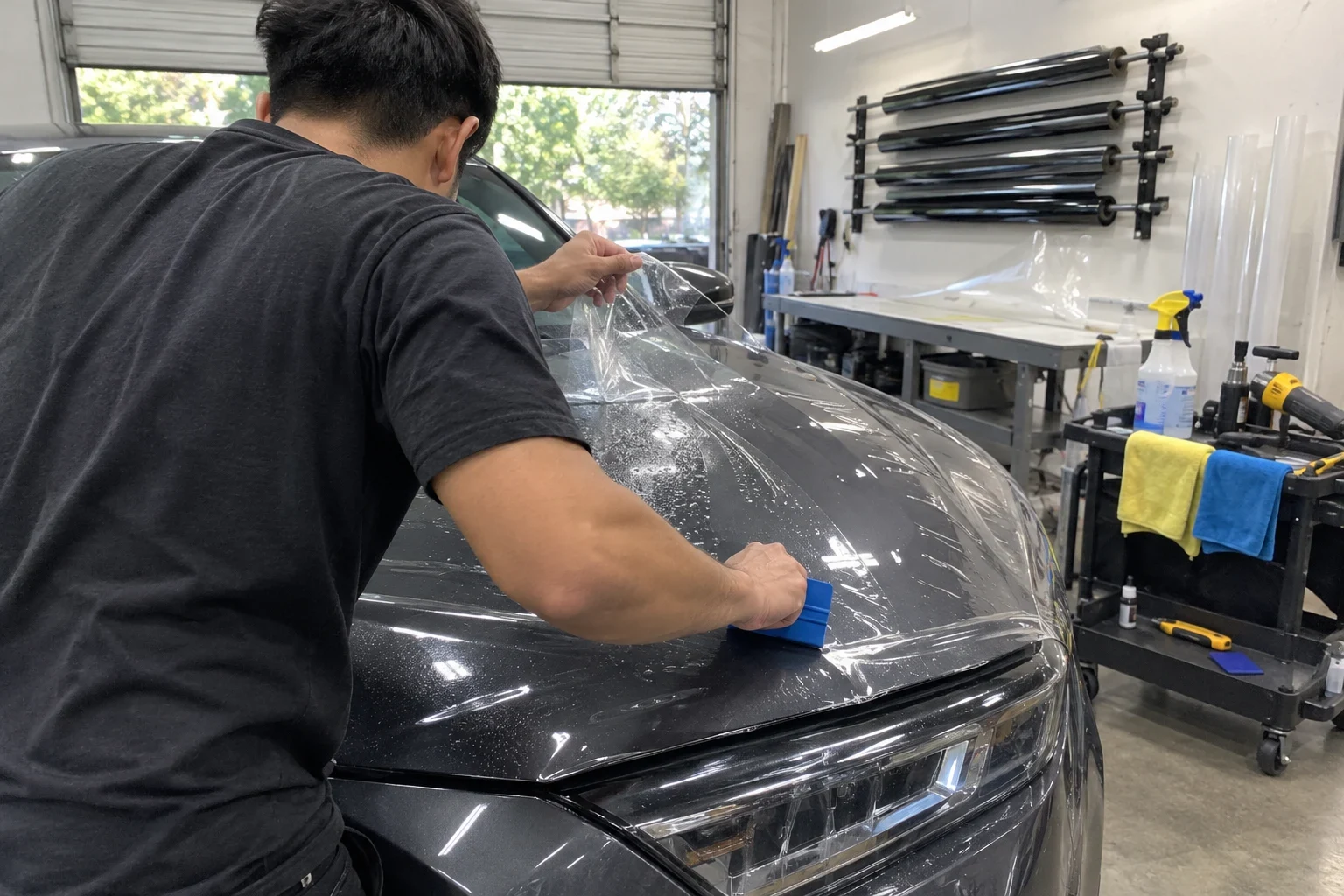
How Our Shop Works
We would rather fix the one thing that failed than sell you a full redo. When replacement really is the better call, we show you why.
Six years in one shop
We have been in business for 6 years, doing film and coating work and nothing else. That focus shows in the small things, like how film edges are wrapped and how glass is cleaned ahead of an install.
A lead installer with 15 years on film
Our lead installer brings 15 years of experience to every car. That means hands-on time with dyed, carbon and ceramic tint films and many generations of paint protection film, enough to tell a lifting edge that can be re-seated from adhesive that has broken down for good.
Repair first, redo when it is the right answer
A single scraped PPF panel can usually be redone on its own. A peeling rear door window does not mean every window needs new tint. If the old film has turned purple or bubbled across the glass, the dye and adhesive have failed and replacement is the honest answer, and we will say so.
Ceramic coating warranty options
Our ceramic coatings come with a 3-, 5- or 9-year warranty, depending on the coating you choose. We explain what separates the tiers, including layer count and prep time, so you can pick the one that fits how long you plan to keep the car.
A clean, controlled install bay
Dust is the enemy of film. We install indoors and wipe down the bay between jobs, which keeps specks and lint out from under tint and PPF.
Film and Coating Work for Your Vehicle
Each service solves a different problem. Window tint cuts heat and UV on the glass, paint protection film takes the rock chips and scuffs that would otherwise reach your clear coat, and ceramic coating gives the paint a hard, slick layer that sheds water and dirt. Windshield protection film is a thin, optically clear layer that absorbs pitting and small impacts so the glass itself stays unmarked.
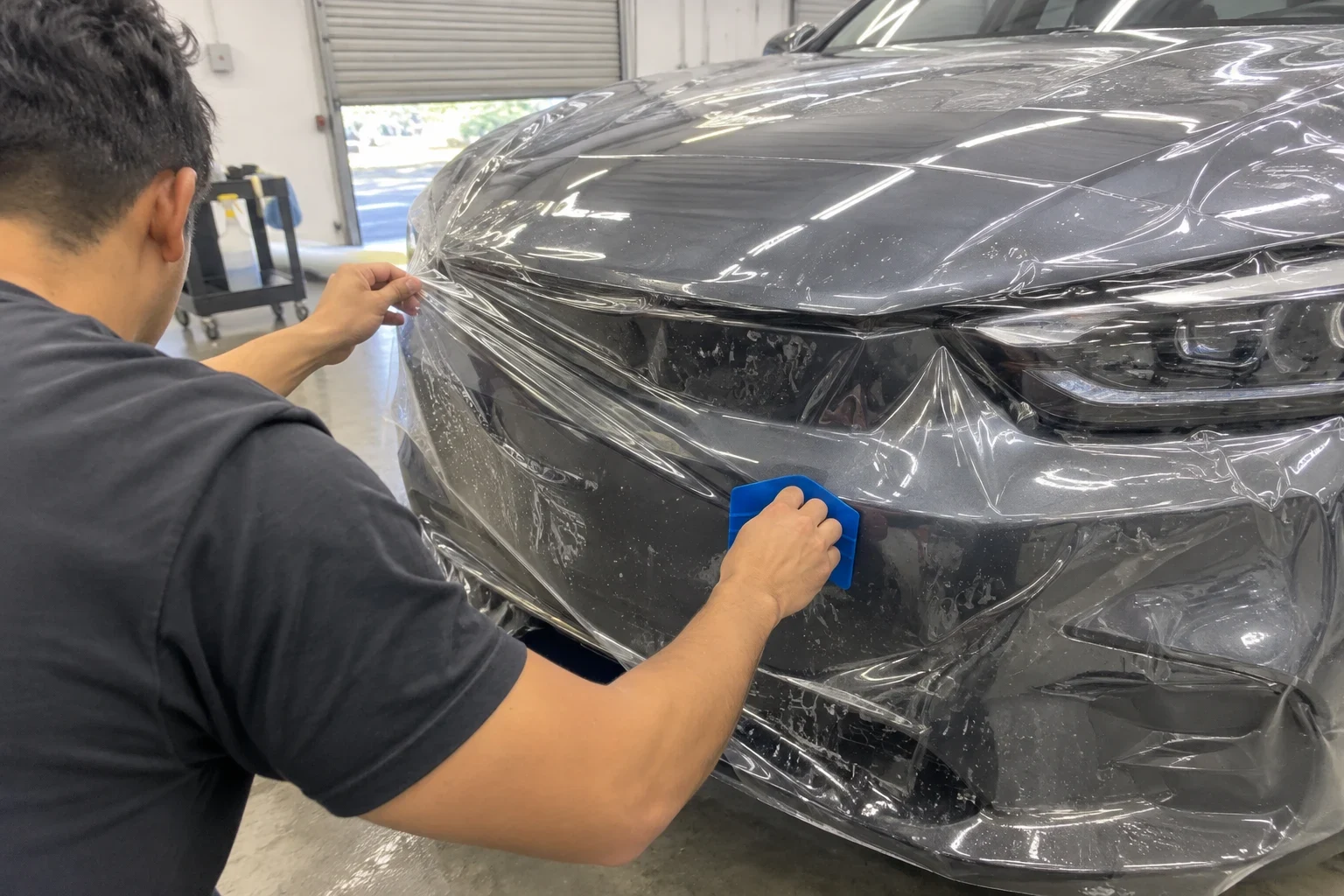
Paint Protection Film
Clear urethane film over your car's high-impact panels to stop rock chips and road rash, plus panel-level repair of damaged film instead of a full strip.
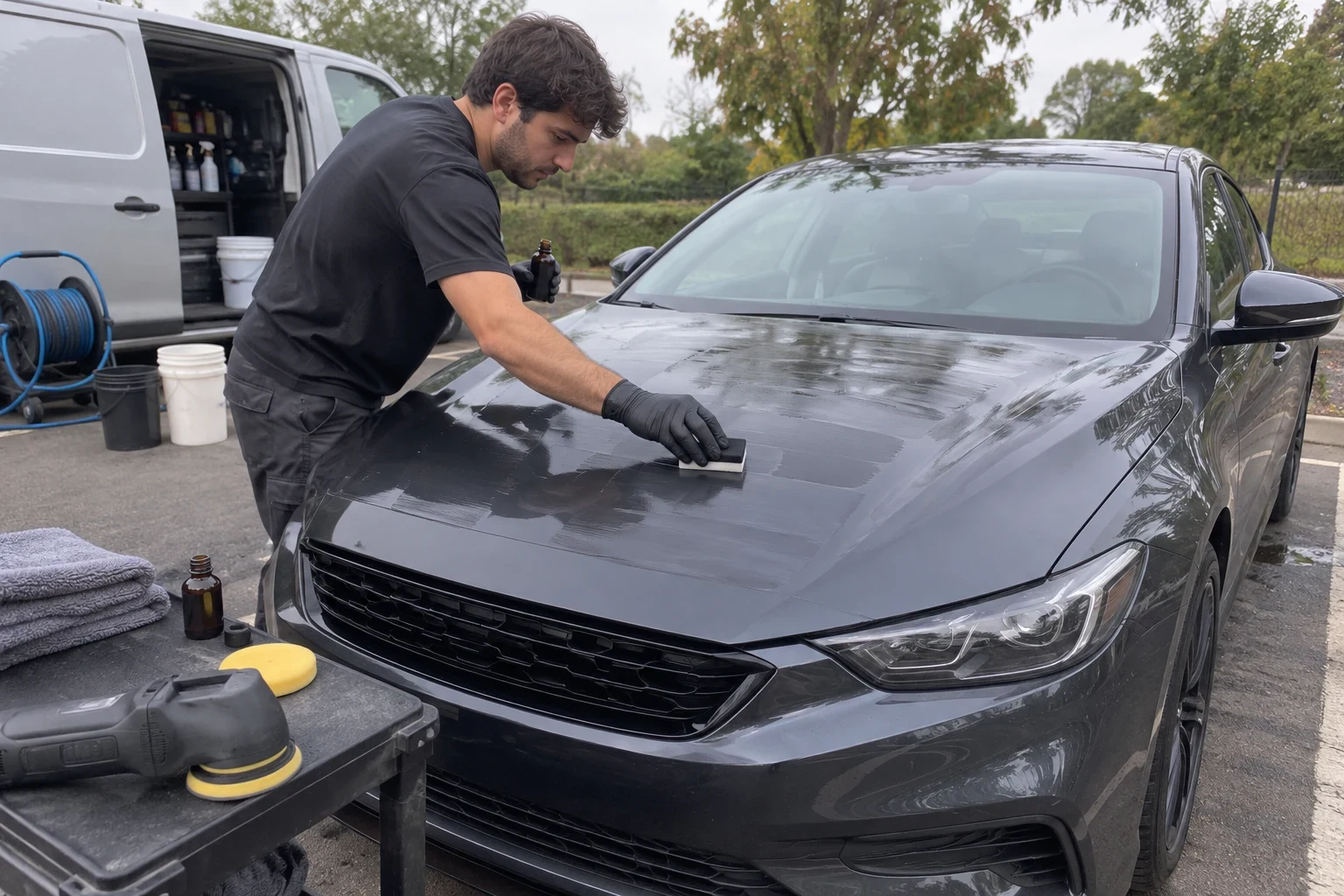
Ceramic Coating
A silica-based coating cured onto properly prepared clear coat, so water beads, grime releases and the paint stays easier to wash for years.
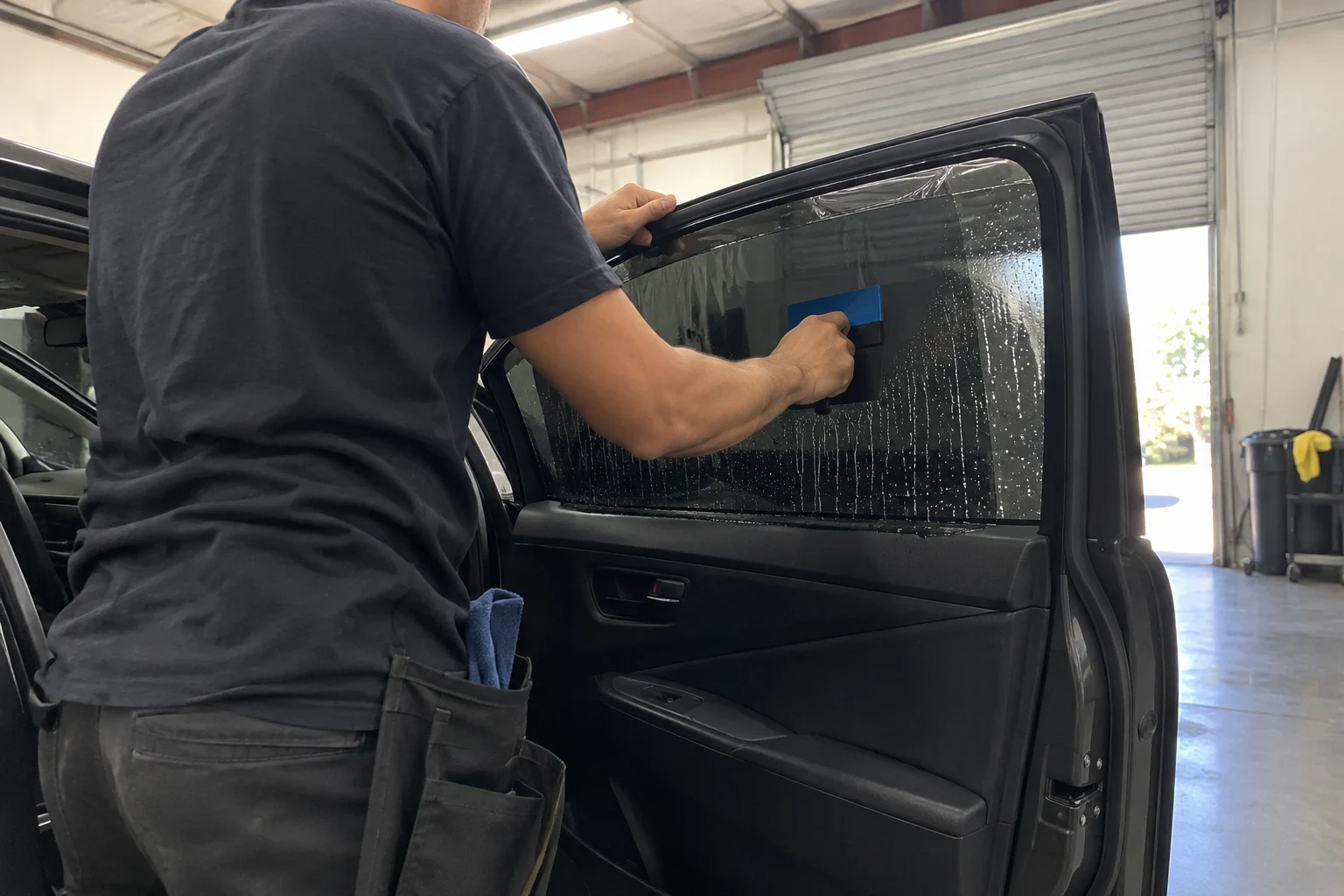
Window Tint
Ceramic and carbon window tint installed at our shop, plus clean removal of failed film and an honest call on fixing one window versus redoing them all.
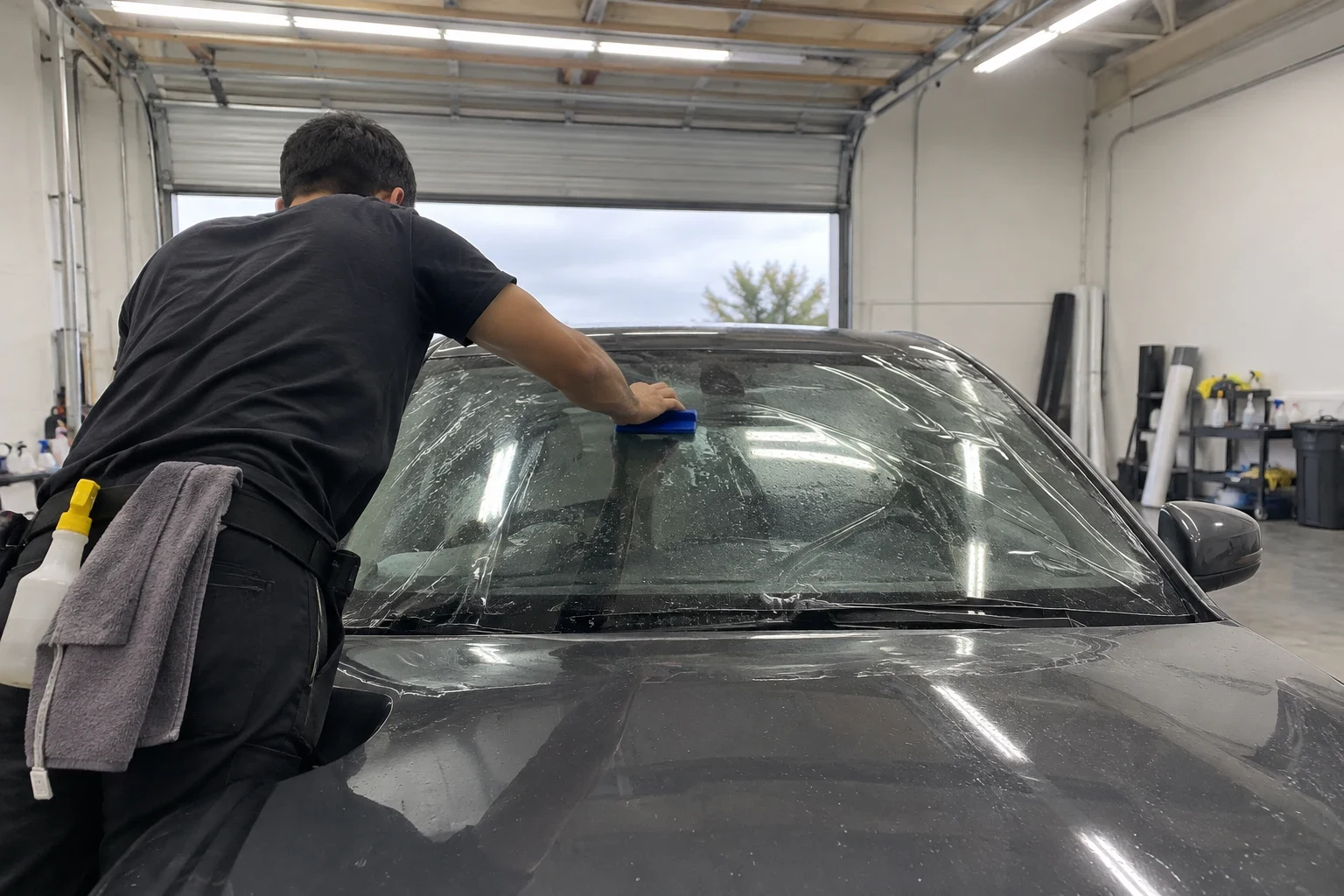
Windshield Protection Film
A clear, renewable film that takes rock strikes so your windshield glass doesn't, installed at our shop after we check the glass for existing chips.
How a Job Runs
Most of the work happens after you drop off the car, but the planning starts on the phone.
- 1
A phone consultation
Tell us the vehicle, what bothers you about it now and what you want protected. We walk through film types and coverage options and give you a quote.
- 2
Drop-off and inspection
We look over the glass, paint and any existing film with you. If something can be repaired instead of replaced, this is where we point it out.
- 3
Prep
Glass is cleaned and clayed, and paint is decontaminated and wiped with a panel prep solution so film and coatings bond properly. Gaskets and trim get covered first, so no liquid reaches them.
- 4
Install
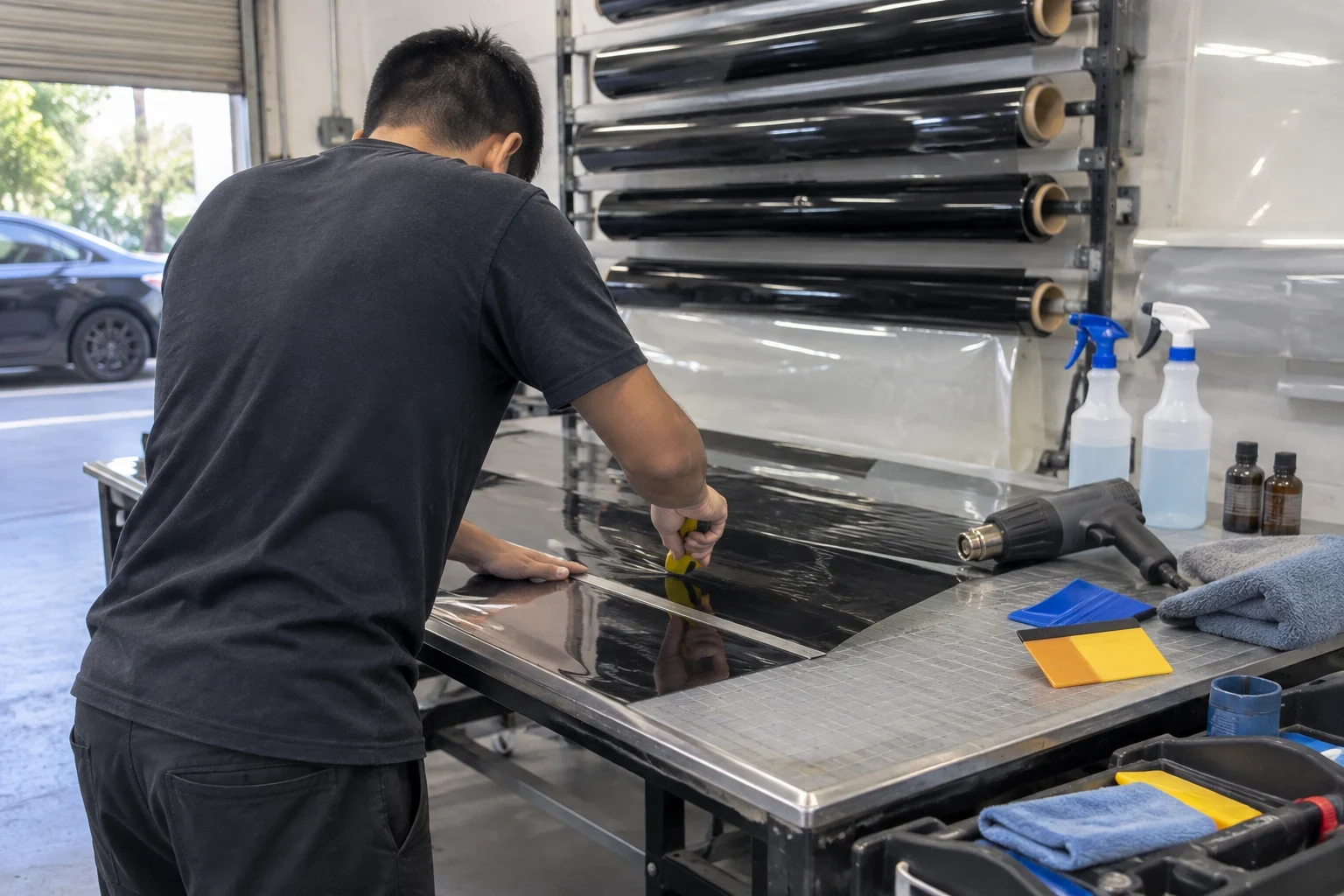
Tint is cut to each window and shrunk to fit curved glass. PPF is stretched and positioned with slip solution, then squeegeed out. Coatings go on in thin, leveled layers.
- 5
Pickup and aftercare
We check the work with you in good light and explain cure times, like keeping tinted windows rolled up for a few days and waiting a set period before the first wash on a fresh coating.
Where Our Customers Come From
Every car gets its work done inside our Folsom shop, and owners make the short trip from all over the east side of the Sacramento area. Plenty of regulars drive in from El Dorado Hills, Orangevale, Fair Oaks, Citrus Heights, Rancho Cordova and Granite Bay. We also see vehicles from Cameron Park, Gold River, Roseville and Arden-Arcade.
- Folsom
- El Dorado Hills
- Orangevale
- Fair Oaks
- Citrus Heights
- Rancho Cordova
- Granite Bay
- Cameron Park
- Gold River
- Roseville
- Arden-Arcade
Since the install happens in our bay, plan on leaving the car with us for the job. Mention your schedule on the phone and we will work out a drop-off and pickup that suits your day.
What Sets the Price
Film and coating work is priced by the vehicle, the material and how much of the car you want covered. Two cars that look similar can quote differently because of glass shape or paint condition. These are the factors that move the number most.
We give you a quote by phone based on your vehicle and the coverage you want, then confirm it when we see the car. If the paint or glass needs extra prep, we tell you before we start.
- Vehicle size and glass shape
- An SUV with a third row has more glass than a coupe. Steeply curved rear windows need the film heat-shrunk to fit, which takes more time.
- Film type
- Dyed tint costs less but rejects less heat. Ceramic tint uses non-metallic particles that block more infrared heat without interfering with phone or GPS signals, and it costs more.
- Coverage area
- Paint protection film can cover just the high-impact zones, like the bumper, hood leading edge and mirrors, or the full front, or the whole car. More panels means more film and more labor.
- Removing old film
- Failed tint leaves adhesive behind that has to be steamed and scraped off without harming defroster lines on the rear glass. That removal is quoted as its own line.
- Paint condition
- Ceramic coating and PPF lock in whatever is under them. Swirls or heavy contamination need more prep ahead of any product going on.
- Coating tier
- Longer-rated ceramic coatings use more layers and more cure time, which is reflected in the price.
Questions Drivers Ask Us
How dark can I tint my windows in California?
California requires the windshield and front side windows to let most light through. Only a non-reflective strip along the top few inches of the windshield is allowed, and the front side windows are limited to very light film. Rear side and back windows can generally go darker. We will explain the current rules for your vehicle before you choose a shade.
Is ceramic tint worth it over regular tint?
Ceramic tint blocks more infrared heat, which is the part of sunlight you feel on your skin, so the cabin stays cooler at the same shade. It also will not fade to purple the way older dyed films can, and it does not interfere with radio or GPS signals. If heat rejection is your main goal, ceramic is usually the better choice.
Can you fix one peeling window instead of redoing them all?
Usually, yes. If the other windows are in good shape, we remove the failed film, clean off the old adhesive and install new tint on that window. We match the shade as closely as possible. If several windows are bubbling or discolored, the film has reached the end of its life and full replacement makes more sense.
What warranty comes with window tint?
Our window tint carries a lifetime warranty. We go over what it covers when you pick up the car, so you know what to look for and when to bring it back.
Should I get paint protection film or ceramic coating?
They do different jobs. Paint protection film is a thick urethane layer that physically absorbs rock chips and scratches. Ceramic coating is a thin, hard layer that makes paint glossier and easier to clean, but it will not stop a chip. Many owners put PPF on the front end and coat the rest of the car.
Does windshield protection film affect visibility?
No, the film is optically clear and made for windshields. It takes the pitting and small impacts from road debris that would otherwise mark the glass. When it wears, we peel it off and lay down a fresh sheet, which costs less than a new windshield.
How much time should I plan to leave my vehicle with you?
That varies with the service. Tinting a set of windows takes less time than wrapping the full front in paint protection film, and a ceramic coating needs prep plus cure time between layers. When we quote the job by phone, we also tell you roughly how long the car will stay in the bay.
A Folsom Shop Built Around Film and Coatings
Car Window Tinting Folsom is a shop for drivers who want their vehicle protected properly. Some customers bring in a brand-new car on delivery week. Others bring a daily driver with tint that has started to bubble, or a front bumper peppered with rock chips from highway miles.
We keep the conversation specific. You will hear which film we recommend, why it suits your car and how you use it, and what it will not do. If a smaller fix solves the problem, we start there.
- In business
- In business for 6 years; Lead installer has 15 years of experience
- Warranty
- 3-, 5- or 9-year warranty on ceramic coatings
Tell Us What Your Car Needs
Describe the vehicle and the problem, whether it is heat, chips or film that has started to fail. We will explain your options, recommend a repair when one will do, and give you a quote.